Tavex uses cookies to improve your user experience. By continuing to use our site without changing your settings, you agree to receive cookies from Tavex’s website. Read more about our cookie policy
Please select what cookies you allow us to use
Cookies are small files of letters and digits downloaded and saved on your computer or another device (for instance, a mobile phone, a tablet) and saved in your browser while you visit a website. They can be used to track the pages you visit on the website, save the information you enter or remember your preferences such as language settings as long as you’re browsing the website.
Cookie usage
Necessary
| Cookie name | Cookie description | Cookie duration |
|---|---|---|
| tavex_cookie_consent | Stores cookie consent options selected | 60 weeks |
| tavex_customer | Tavex customer ID | 30 days |
| wp-wpml_current_language | Stores selected language | 1 day |
| AWSALB | AWS ALB sticky session cookie | 6 days |
| AWSALBCORS | AWS ALB sticky session cookie | 6 days |
| NO_CACHE | Used to disable page caching | 1 day |
| PHPSESSID | Identifier for PHP session | Session |
| latest_news | Helps to keep notifications relevant by storing the latest news shown | 29 days |
| latest_news_flash | Helps to keep notifications relevant by storing the latest news shown | 29 days |
| tavex_recently_viewed_products | List of recently viewed products | 1 day |
| tavex_compare_amount | Number of items in product comparison view | 1 day |
Preference
| Cookie name | Cookie description | Cookie duration |
|---|---|---|
| chart-widget-tab-*-*-* | Remembers last chart options (i.e currency, time period, etc) | 29 days |
| archive_layout | Stores selected product layout on category pages | 1 day |
Marketing
| Cookie name | Cookie description | Cookie duration |
|---|---|---|
| cartstack.com-* | Used for tracking abandoned shopping carts | 1 year |
| _omappvp | Used by OptinMonster for determining new vs. returning visitors. Expires in 11 years | 11 years |
| _omappvs | Used by OptinMonster for determining when a new visitor becomes a returning visitor | Session |
| om* | Used by OptinMonster to track interactions with campaigns | Persistent |
Statistic
| Cookie name | Cookie description | Cookie duration |
|---|---|---|
| _ga | Used to distinguish users | 2 years |
| _gid | Used to distinguish users | 24 hours |
| _ga_* | Used to persist session state | 2 years |
| _gac_* | Contains campaign related information | 90 days |
| _gat_gtag_* | Used to throttle request rate | 1 minute |
| _fbc | Facebook advertisement cookie | 2 years |
| _fbp | Facebook cookie for distinguishing unique users | 2 years |

Are olympic gold medals made of real gold?
Published by Mattias Söderström in category Articles on 01.08.2024
Gold price (XAU-SEK)
40238,40 SEK/oz
+ 279,10 SEK
Silver price (XAG-SEK)
538,08 SEK/oz
+ 5,25 SEK

Innehållsförteckning / Table of Contents
Olympic gold medals symbolize the ultimate achievement in sports, but are they really made of pure gold? The answer might surprise many!
What are Olympic gold medals made of?
Since 1912, Olympic gold medals have not been made of pure gold, despite their appearance. They are primarily composed of silver and are covered with a thin layer of gold. According to the International Olympic Committee, gold medals must contain at least 92.5% silver and be plated with at least 6 grams of pure gold.
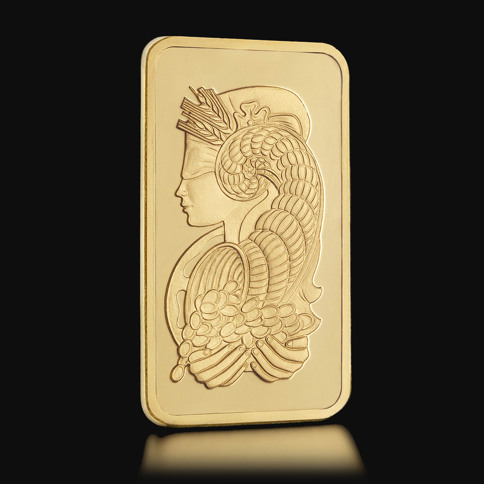
Buy this gold bar today at a market price!
Steel from the Eiffel Tower in the 2024 Olympic medals
This year’s medals weigh 529 grams and are made of:
- 505 grams of silver
- 6 grams of gold
- 18 grams of steel
What makes the medals for the Paris 2024 Olympics unique is the use of steel from the Eiffel Tower. This steel has been fashioned into a hexagonal plate with engravings, giving the medals a special historical and cultural significance.
Including material from one of the world’s most famous buildings adds an extra layer of value and symbolism to the medals.
The value of the materials in Olympic medals
To understand the economic value of these medals, we can look at current market prices. As of today, 6 grams of gold is worth approximately 5046 kronor, and 505 grams of silver is also worth about 5046 kronor. You can always follow the current gold and silver prices here.
Despite the material value, the true worth of the medals is much greater – they represent the athletes’ hard work and incredible achievements.
Stockholm 1912 – the last pure gold medals
The last Olympic gold medals made entirely of pure gold were awarded at the 1912 Olympics in Stockholm. These medals were significantly smaller than today’s medals.
After the 1912 Olympics, silver became the primary metal used to reduce costs and make the medals more manageable. Despite this change, the medals retained their aesthetic charm and high symbolic value.
Why not pure gold in Olympic medals?
There are several reasons why Olympic gold medals are no longer made of solid gold:
- Cost: Producing medals from pure gold for all winners would be extremely expensive.
- Weight: Gold is much heavier than silver, making the medals uncomfortably heavy to wear.
- Practicality: By using silver as the base and plating it with gold, the iconic look can be maintained at a more reasonable cost and weight.
Olympic medals are priceless
Even though Olympic gold medals haven’t been entirely made of gold since 1912, they are coated with a layer of real gold that gives them their shiny and valuable appearance. These medals combine valuable materials with the athletes’ immense effort, making them priceless.
Do you have any thoughts or questions about Olympic medals? Feel free to share your thoughts in the comments below!
Gold price (XAU-SEK)
40238,40 SEK/oz
+ 279,10 SEK
Silver price (XAG-SEK)
538,08 SEK/oz
+ 5,25 SEK
Recommended articles


You might also like to read


Contact
Tavex AB Reg.nr.: 556671-1189 Smålandsgatan 9, 111 46 Stockholm, Sweden
E-mail: tavex@tavex.se
Tel. 08-678 20 30

Comments