Tavex uses cookies to improve your user experience. By continuing to use our site without changing your settings, you agree to receive cookies from Tavex’s website. Read more about our cookie policy
Please select what cookies you allow us to use
Cookies are small files of letters and digits downloaded and saved on your computer or another device (for instance, a mobile phone, a tablet) and saved in your browser while you visit a website. They can be used to track the pages you visit on the website, save the information you enter or remember your preferences such as language settings as long as you’re browsing the website.
Cookie usage
Necessary
| Cookie name | Cookie description | Cookie duration |
|---|---|---|
| tavex_cookie_consent | Stores cookie consent options selected | 60 weeks |
| tavex_customer | Tavex customer ID | 30 days |
| wp-wpml_current_language | Stores selected language | 1 day |
| AWSALB | AWS ALB sticky session cookie | 6 days |
| AWSALBCORS | AWS ALB sticky session cookie | 6 days |
| NO_CACHE | Used to disable page caching | 1 day |
| PHPSESSID | Identifier for PHP session | Session |
| latest_news | Helps to keep notifications relevant by storing the latest news shown | 29 days |
| latest_news_flash | Helps to keep notifications relevant by storing the latest news shown | 29 days |
| tavex_recently_viewed_products | List of recently viewed products | 1 day |
| tavex_compare_amount | Number of items in product comparison view | 1 day |
Preference
| Cookie name | Cookie description | Cookie duration |
|---|---|---|
| chart-widget-tab-*-*-* | Remembers last chart options (i.e currency, time period, etc) | 29 days |
| archive_layout | Stores selected product layout on category pages | 1 day |
Marketing
| Cookie name | Cookie description | Cookie duration |
|---|---|---|
| cartstack.com-* | Used for tracking abandoned shopping carts | 1 year |
| _omappvp | Used by OptinMonster for determining new vs. returning visitors. Expires in 11 years | 11 years |
| _omappvs | Used by OptinMonster for determining when a new visitor becomes a returning visitor | Session |
| om* | Used by OptinMonster to track interactions with campaigns | Persistent |
Statistic
| Cookie name | Cookie description | Cookie duration |
|---|---|---|
| _ga | Used to distinguish users | 2 years |
| _gid | Used to distinguish users | 24 hours |
| _ga_* | Used to persist session state | 2 years |
| _gac_* | Contains campaign related information | 90 days |
| _gat_gtag_* | Used to throttle request rate | 1 minute |
| _fbc | Facebook advertisement cookie | 2 years |
| _fbp | Facebook cookie for distinguishing unique users | 2 years |

Gold Rush 2.0: Central Banks Are Stockpiling Gold to Navigate Economic Storms
Published by Karl Martin Karus in category Articles on 24.07.2024
Gold price (XAU-SEK)
40225,80 SEK/oz
+ 225,40 SEK
Silver price (XAG-SEK)
534,97 SEK/oz
+ 0,53 SEK

Innehållsförteckning / Table of Contents
Featured image by: Photo by Etienne Martin on Unsplash
Introduction
Central banks are making a glittering choice in a world of economic unpredictability: they’re significantly boosting their gold reserves.
This strategic move isn’t just about adding gold to their vaults. It’s a calculated response to uncertain inflation, significant geopolitical tensions, and the need to escape the rollercoaster ride of volatile financial assets.
This article delves into the reasons behind the modern gold rush and what it means for the global economy.
Inflation: The Persistent Problem

Photo by Vasilis Caravitis on Unsplash
Even though authorities claim inflation is under control, the reality paints a different picture.
As of mid-2024, the US is grappling with an annual inflation rate of 3%, while the Eurozone isn’t far behind at 2.6%. Some Eurozone countries even see rates above 3%, signaling that inflationary pressures are far from over.
In response, central banks are treading a tightrope, maintaining or cautiously lowering interest rates to manage inflation without seeming lenient.
Gold: The Shining Beacon of Economic Stability

Amidst this economic turbulence, gold has become the star performer. By July 2024, gold prices soared to over $2400 per ounce, a remarkable 16.5% increase since January.
This surge has outshone major stock indices like the S&P 500 and the Stoxx 600. Gold’s allure lies in its timeless role as a shield against inflation and currency devaluation, providing a beacon of stability in uncertain times.
Central Banks’ Strategic Gold Purchases
Central banks around the world are buying more gold. Countries like China and India are leading this trend to depend less on unstable government bonds.
The World Gold Council says central banks bought over 1000 tonnes of gold annually in 2022 and 2023. This buying spree makes up almost a quarter of the yearly gold market, pushing prices up significantly.
China’s Gold Accumulation
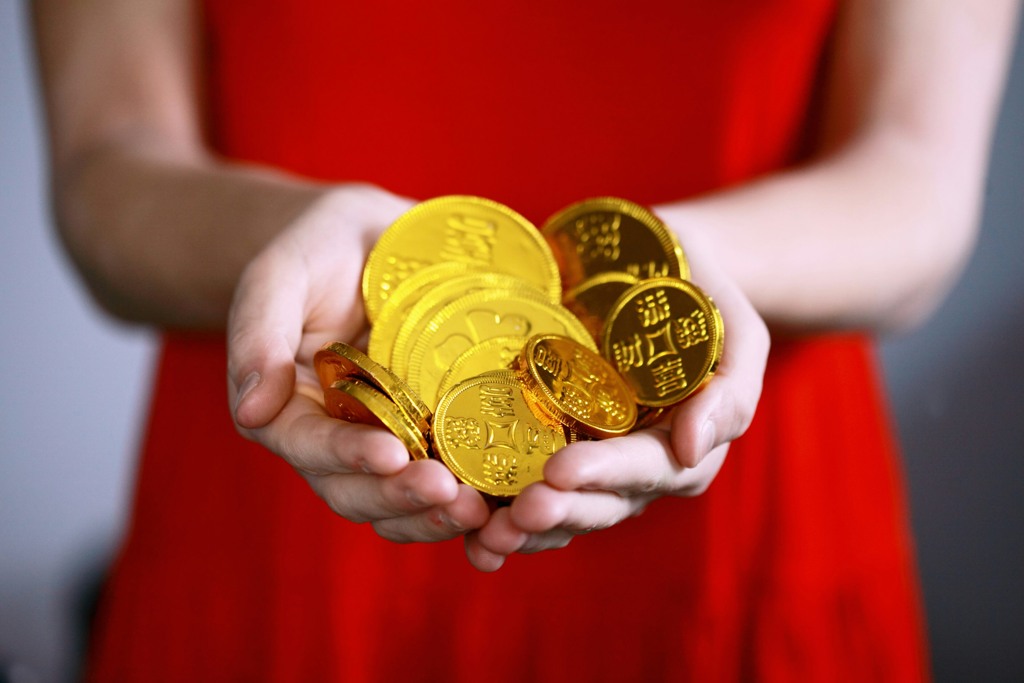
Photo by Alexander Grey on Unsplash
China’s central bank is an important player in increasing gold reserves. By the end of 2023, China’s gold reserves reached 2,235 tons, an increase of 225 tons since 2022.
This is the biggest yearly increase since 1977. By early 2024, gold made up 4.3% of China’s foreign exchange reserves, up from 2.9% in 2019. This isn’t just a financial move but also a reaction to growing geopolitical tensions.
India’s Growing Gold Reserves

Photo by Laurentiu Morariu on Unsplash
India’s central bank is also boosting its gold reserves. In June 2024, the Reserve Bank of India added more than nine tonnes of gold, bringing its total reserves to 841 tonnes.
This fits with the broader trend of central banks increasing their gold holdings due to financial and geopolitical uncertainties.
Geopolitical Tensions Fuel Gold Demand
Geopolitical tensions are another reason central banks are buying more gold. Sanctions by the EU and US on Russia, including freezing its central bank’s foreign reserves, have led many central banks to rethink their assets.
As a result, they are shifting towards gold to ensure their reserves are less vulnerable to international sanctions and political instability. This situation has made gold more attractive as a safer and more reliable asset during global financial instability, reinforcing its status as a dependable store of value.
See live gold prices in Swedish Kronas here.
Gold’s Performance and Future Outlook
Gold has been a top-performing global asset in 2024, with a 12.7% increase. By July, gold prices were around $2324 per ounce, just 5% below the all-time high set in May.
The World Gold Council’s midyear report indicates that current prices match market expectations, but gold could perform even better if interest rates fall and geopolitical tensions persist.
Conclusion
The increasing gold reserves held by central banks highlight gold’s enduring value as a stable and reliable asset during economic uncertainty. With ongoing inflation, rising geopolitical tensions, and volatile financial markets, gold’s importance in global finance is set to grow. This strategic move stabilizes central bank reserves and reinforces gold’s role as a safe haven in turbulent times.
Gold price (XAU-SEK)
40225,80 SEK/oz
+ 225,40 SEK
Silver price (XAG-SEK)
534,97 SEK/oz
+ 0,53 SEK
Recommended articles


You might also like to read


Contact
Tavex AB Reg.nr.: 556671-1189 Smålandsgatan 9, 111 46 Stockholm, Sweden
E-mail: tavex@tavex.se
Tel. 08-678 20 30
Comments