Tavex uses cookies to improve your user experience. By continuing to use our site without changing your settings, you agree to receive cookies from Tavex’s website. Read more about our cookie policy
Please select what cookies you allow us to use
Cookies are small files of letters and digits downloaded and saved on your computer or another device (for instance, a mobile phone, a tablet) and saved in your browser while you visit a website. They can be used to track the pages you visit on the website, save the information you enter or remember your preferences such as language settings as long as you’re browsing the website.
Cookie usage
Necessary
| Cookie name | Cookie description | Cookie duration |
|---|---|---|
| tavex_cookie_consent | Stores cookie consent options selected | 60 weeks |
| tavex_customer | Tavex customer ID | 30 days |
| wp-wpml_current_language | Stores selected language | 1 day |
| AWSALB | AWS ALB sticky session cookie | 6 days |
| AWSALBCORS | AWS ALB sticky session cookie | 6 days |
| NO_CACHE | Used to disable page caching | 1 day |
| PHPSESSID | Identifier for PHP session | Session |
| latest_news | Helps to keep notifications relevant by storing the latest news shown | 29 days |
| latest_news_flash | Helps to keep notifications relevant by storing the latest news shown | 29 days |
| tavex_recently_viewed_products | List of recently viewed products | 1 day |
| tavex_compare_amount | Number of items in product comparison view | 1 day |
Preference
| Cookie name | Cookie description | Cookie duration |
|---|---|---|
| chart-widget-tab-*-*-* | Remembers last chart options (i.e currency, time period, etc) | 29 days |
| archive_layout | Stores selected product layout on category pages | 1 day |
Marketing
| Cookie name | Cookie description | Cookie duration |
|---|---|---|
| cartstack.com-* | Used for tracking abandoned shopping carts | 1 year |
| _omappvp | Used by OptinMonster for determining new vs. returning visitors. Expires in 11 years | 11 years |
| _omappvs | Used by OptinMonster for determining when a new visitor becomes a returning visitor | Session |
| om* | Used by OptinMonster to track interactions with campaigns | Persistent |
Statistic
| Cookie name | Cookie description | Cookie duration |
|---|---|---|
| _ga | Used to distinguish users | 2 years |
| _gid | Used to distinguish users | 24 hours |
| _ga_* | Used to persist session state | 2 years |
| _gac_* | Contains campaign related information | 90 days |
| _gat_gtag_* | Used to throttle request rate | 1 minute |
| _fbc | Facebook advertisement cookie | 2 years |
| _fbp | Facebook cookie for distinguishing unique users | 2 years |

Physical Silver or Silver ETFs – Which Should You Choose in 2025?
Published by Mattias Söderström in category Articles on 21.10.2025
Gold price (XAU-SEK)
41226,40 SEK/oz
- 317,00 SEK
Silver price (XAG-SEK)
603,50 SEK/oz
- 8,64 SEK
Innehållsförteckning / Table of Contents
Silver is attracting more and more investors in 2025 – but should you choose physical silver or a silver ETF? Here we explain the differences.
Silver has climbed on investors’ radar this year – a combination of strong industrial demand and growing concern over economic instability has driven the price higher.
The question now is which path suits you best: owning the metal directly or buying an exchange-traded product that tracks the price. Here we look at what sets the options apart – and why physical silver can still be the most sensible choice.
What does it mean to own physical silver?
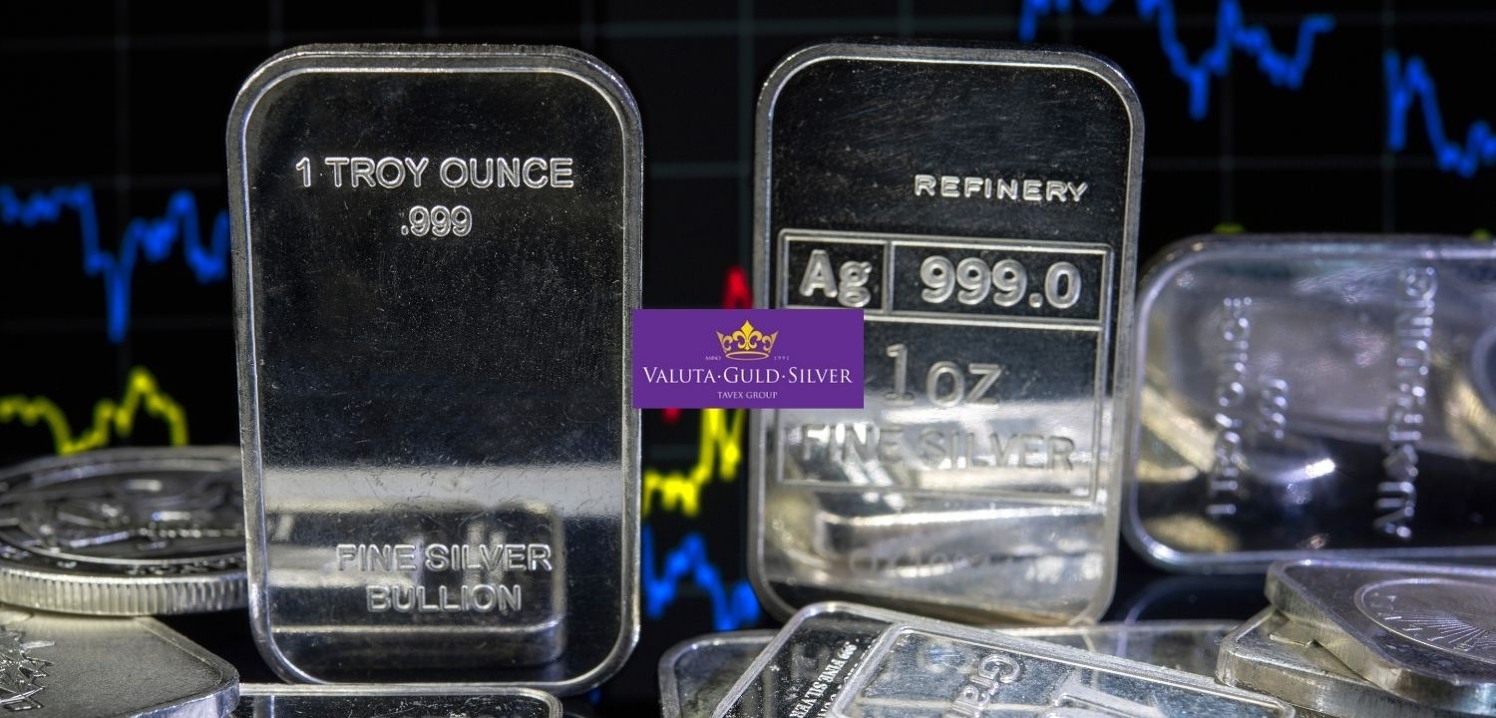
Buying physical silver means you actually own the metal – in the form of bars or coins – and can store it yourself, for example in a safe deposit box or a home safe. It is direct ownership without intermediaries. The ownership is concrete and tangible – you have access to it without being dependent on any other party.
Buy this physical silver coin at a great price today!

What is a silver ETF or silver stock?
A silver ETF (exchange-traded fund) is a financial instrument that tracks the development of the silver price or invests in companies within the silver industry. You buy shares via an online broker – it’s quick and simple. But what you own is not the metal itself but a security, which means you are dependent on the fund’s structure and the financial system.
Comparison: Physical Silver vs. Silver ETFs
Here are some key points to keep in mind when deciding between direct ownership and financial exposure:
- Physical silver gives you ownership of a concrete asset that stands independent of financial intermediaries.
- Silver ETFs are liquid and easy to trade, but they involve counterparty risk and costs in the form of fees.
- Storing and selling physical silver requires effort and can be less convenient than trading ETFs.
- An ETF gives you quick access to price movements, which can be attractive for short-term strategies.
Which option suits you?
If you’re looking for security, value preservation, and something that stands outside the financial system, physical silver is the natural choice.
If instead you want flexibility and fast trading, a silver ETF may be a better fit. A common strategy is to combine the two – keep a stable foundation in physical metal and complement it with a smaller portion of financial instruments for short-term exposure.
Why you should consider physical silver
The silver market is shifting: inventories have fallen, demand from the technology and energy sectors is rising, and investors are looking for safer assets. Physical silver offers an alternative where you own the metal itself – without fund structures, counterparties, or derivatives. If your portfolio aims to include a store of value or a safe asset, the physical option is hard to ignore.
Gold price (XAU-SEK)
41226,40 SEK/oz
- 317,00 SEK
Silver price (XAG-SEK)
603,50 SEK/oz
- 8,64 SEK
Recommended articles


You might also like to read


Contact
Tavex AB Reg.nr.: 556671-1189 Smålandsgatan 9, 111 46 Stockholm, Sweden
E-mail: tavex@tavex.se
Tel. 08-678 20 30

Comments