Tavex uses cookies to improve your user experience. By continuing to use our site without changing your settings, you agree to receive cookies from Tavex’s website. Read more about our cookie policy
Please select what cookies you allow us to use
Cookies are small files of letters and digits downloaded and saved on your computer or another device (for instance, a mobile phone, a tablet) and saved in your browser while you visit a website. They can be used to track the pages you visit on the website, save the information you enter or remember your preferences such as language settings as long as you’re browsing the website.
Cookie usage
Necessary
| Cookie name | Cookie description | Cookie duration |
|---|---|---|
| tavex_cookie_consent | Stores cookie consent options selected | 60 weeks |
| tavex_customer | Tavex customer ID | 30 days |
| wp-wpml_current_language | Stores selected language | 1 day |
| AWSALB | AWS ALB sticky session cookie | 6 days |
| AWSALBCORS | AWS ALB sticky session cookie | 6 days |
| NO_CACHE | Used to disable page caching | 1 day |
| PHPSESSID | Identifier for PHP session | Session |
| latest_news | Helps to keep notifications relevant by storing the latest news shown | 29 days |
| latest_news_flash | Helps to keep notifications relevant by storing the latest news shown | 29 days |
| tavex_recently_viewed_products | List of recently viewed products | 1 day |
| tavex_compare_amount | Number of items in product comparison view | 1 day |
Preference
| Cookie name | Cookie description | Cookie duration |
|---|---|---|
| chart-widget-tab-*-*-* | Remembers last chart options (i.e currency, time period, etc) | 29 days |
| archive_layout | Stores selected product layout on category pages | 1 day |
Marketing
| Cookie name | Cookie description | Cookie duration |
|---|---|---|
| cartstack.com-* | Used for tracking abandoned shopping carts | 1 year |
| _omappvp | Used by OptinMonster for determining new vs. returning visitors. Expires in 11 years | 11 years |
| _omappvs | Used by OptinMonster for determining when a new visitor becomes a returning visitor | Session |
| om* | Used by OptinMonster to track interactions with campaigns | Persistent |
Statistic
| Cookie name | Cookie description | Cookie duration |
|---|---|---|
| _ga | Used to distinguish users | 2 years |
| _gid | Used to distinguish users | 24 hours |
| _ga_* | Used to persist session state | 2 years |
| _gac_* | Contains campaign related information | 90 days |
| _gat_gtag_* | Used to throttle request rate | 1 minute |
| _fbc | Facebook advertisement cookie | 2 years |
| _fbp | Facebook cookie for distinguishing unique users | 2 years |

What does the gold standard mean and what advantages did it offer?
Published by Mattias Söderström in category Articles on 06.09.2024
Gold price (XAU-SEK)
41226,40 SEK/oz
- 317,00 SEK
Silver price (XAG-SEK)
603,50 SEK/oz
- 8,64 SEK

Vad betyder guldmyntfot? Bildkälla: Canva
Innehållsförteckning / Table of Contents
The gold standard was once the foundation of the world’s economic system. It was a way to guarantee the value of currencies by linking them to gold. But what exactly does the gold standard mean, and why was it abandoned?
What is the gold standard?
Simply put, the gold standard means that a currency corresponds to a certain amount of gold. Banknotes and coins could be exchanged for gold. This system provided stability because gold has retained its value over time. Countries like the United States and Sweden used the gold standard to protect their economies against inflation.
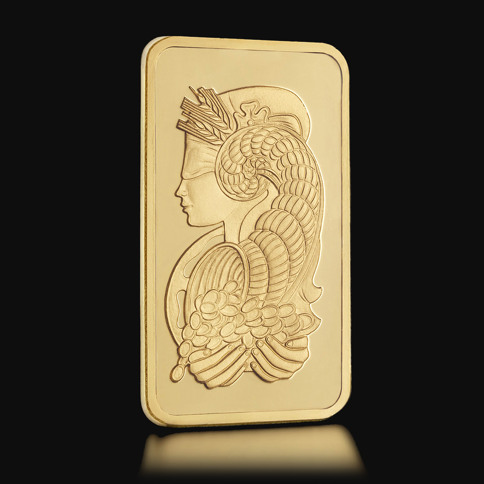
Buy an affordable gold bar today!
The history and development of the gold standard
The gold standard spread during the 19th century and became a cornerstone of economies in the early 20th century. Currencies were tied to a specific amount of gold, making them stable and predictable. This greatly facilitated international trade.
After World War II, the Bretton Woods system was introduced. Here, the dollar was tied to gold, and other currencies were pegged to the dollar. This provided a long period of global economic stability.
The gold standard in Sweden
In 1873, Sweden joined the gold standard. It was part of a larger currency union with our neighboring countries Denmark and Norway. The currency became stable and could be exchanged for gold. However, when World War I started in 1914, it became more difficult to maintain the system. After many attempts to return to it, the system was finally abandoned in the 1930s.
Why was the gold standard abandoned?
A major issue with the gold standard was that it slowed economic growth. Countries couldn’t simply print more money when needed, as it always had to be backed by a certain amount of gold. This could really cause problems and bring the economy to a standstill.
In the 1970s, the United States decided to abandon the gold standard. This marked the end of the “Bretton Woods system” and the transition to fiat currencies, where money no longer needed to be backed by gold.
Various advantages and disadvantages of the gold standard
Even though the gold standard is no longer in use, there are pros and cons to the system that are worth considering:
Advantages:
- Creates stability in exchange rates.
- Protects against inflation.
- Reduces the risk of excessive money printing.
Disadvantages:
- Limits economic growth.
- Less flexible during economic crises.
- Requires large gold reserves, which is not always practical.
The gold standard shows how money was once worth its gold. Although we have moved away from the system, it reminds us why stable currencies are so important. Today, gold is still seen as a safe investment, especially in times of economic uncertainty. Are you interested? Tavex has gold coins and gold bars, suitable for both small and large investments.
Visit us in-store or online at www.tavex.se.
Gold price (XAU-SEK)
41226,40 SEK/oz
- 317,00 SEK
Silver price (XAG-SEK)
603,50 SEK/oz
- 8,64 SEK
Recommended articles


You might also like to read


Contact
Tavex AB Reg.nr.: 556671-1189 Smålandsgatan 9, 111 46 Stockholm, Sweden
E-mail: tavex@tavex.se
Tel. 08-678 20 30
Comments