Tavex uses cookies to improve your user experience. By continuing to use our site without changing your settings, you agree to receive cookies from Tavex’s website. Read more about our cookie policy
Please select what cookies you allow us to use
Cookies are small files of letters and digits downloaded and saved on your computer or another device (for instance, a mobile phone, a tablet) and saved in your browser while you visit a website. They can be used to track the pages you visit on the website, save the information you enter or remember your preferences such as language settings as long as you’re browsing the website.
Cookie usage
Necessary
| Cookie name | Cookie description | Cookie duration |
|---|---|---|
| tavex_cookie_consent | Stores cookie consent options selected | 60 weeks |
| tavex_customer | Tavex customer ID | 30 days |
| wp-wpml_current_language | Stores selected language | 1 day |
| AWSALB | AWS ALB sticky session cookie | 6 days |
| AWSALBCORS | AWS ALB sticky session cookie | 6 days |
| NO_CACHE | Used to disable page caching | 1 day |
| PHPSESSID | Identifier for PHP session | Session |
| latest_news | Helps to keep notifications relevant by storing the latest news shown | 29 days |
| latest_news_flash | Helps to keep notifications relevant by storing the latest news shown | 29 days |
| tavex_recently_viewed_products | List of recently viewed products | 1 day |
| tavex_compare_amount | Number of items in product comparison view | 1 day |
Preference
| Cookie name | Cookie description | Cookie duration |
|---|---|---|
| chart-widget-tab-*-*-* | Remembers last chart options (i.e currency, time period, etc) | 29 days |
| archive_layout | Stores selected product layout on category pages | 1 day |
Marketing
| Cookie name | Cookie description | Cookie duration |
|---|---|---|
| cartstack.com-* | Used for tracking abandoned shopping carts | 1 year |
| _omappvp | Used by OptinMonster for determining new vs. returning visitors. Expires in 11 years | 11 years |
| _omappvs | Used by OptinMonster for determining when a new visitor becomes a returning visitor | Session |
| om* | Used by OptinMonster to track interactions with campaigns | Persistent |
Statistic
| Cookie name | Cookie description | Cookie duration |
|---|---|---|
| _ga | Used to distinguish users | 2 years |
| _gid | Used to distinguish users | 24 hours |
| _ga_* | Used to persist session state | 2 years |
| _gac_* | Contains campaign related information | 90 days |
| _gat_gtag_* | Used to throttle request rate | 1 minute |
| _fbc | Facebook advertisement cookie | 2 years |
| _fbp | Facebook cookie for distinguishing unique users | 2 years |


Innehållsförteckning / Table of Contents
Gold jewellery can have different colours. This is because the element gold – chemical name Au – is a precious metal that is relatively soft. In its pure form, it is therefore not hard enough to be used in jewellery, especially in rings. It would scratch in no time and even lose its shape. Other substances are added to form an alloy. Besides red and yellow gold, white gold is a common alloy. What exactly is white gold and what characterises it?
We have been working with gold and precious metals since 1991 and are Northern Europe’s largest trader! Click here to take a closer look at our investment gold!
What is white gold?
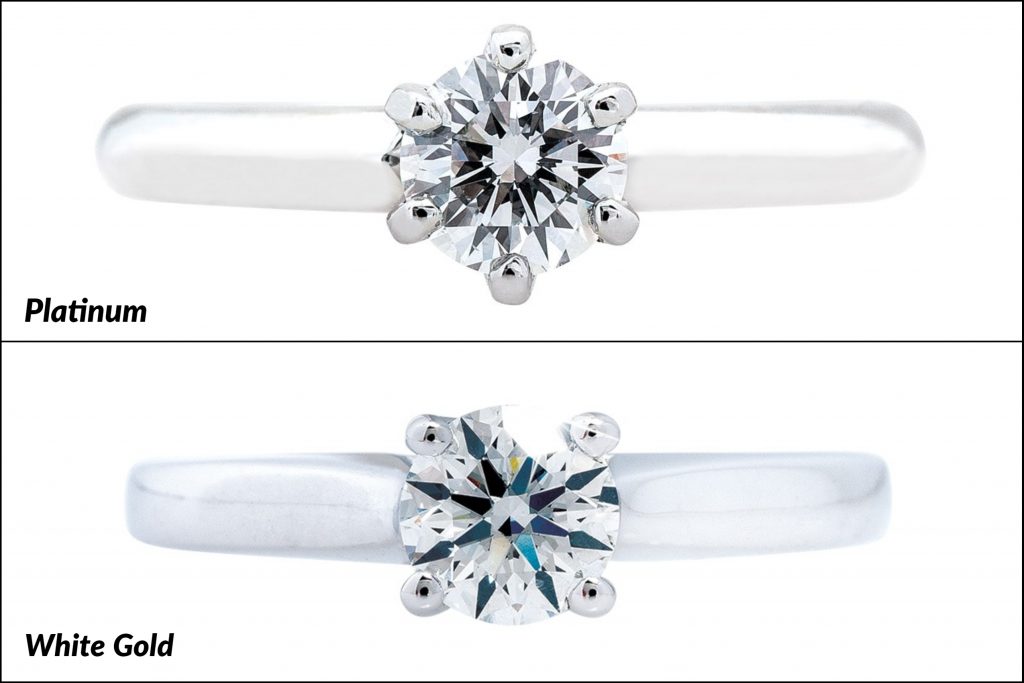
What is white gold made of? There is no precise definition of white gold. There is no “best way” to make white gold – almost every jeweller has their own individual composition. A piece of 18-carat white gold jewellery consists of 75% fine gold mixed with a total of 25% other metals such as palladium, nickel, zinc and silver in varying amounts and proportions.
White gold is not found in nature, but is created by mixing yellow 999 fine gold with other metals. The process is called alloying, and the finished precious metal is called alloy, which comes from the Latin word ‘ligare’, meaning ‘to join’.
How can you tell the quality of a white gold ring? The hallmark is engraved on the inside of your white gold ring. It is a quality stamp that assures you of the quality of the alloy. The code in white gold jewellery is always au750. You can read more about how to check the authenticity of your jewellery by clicking here.
What is rhodium plating of white gold?
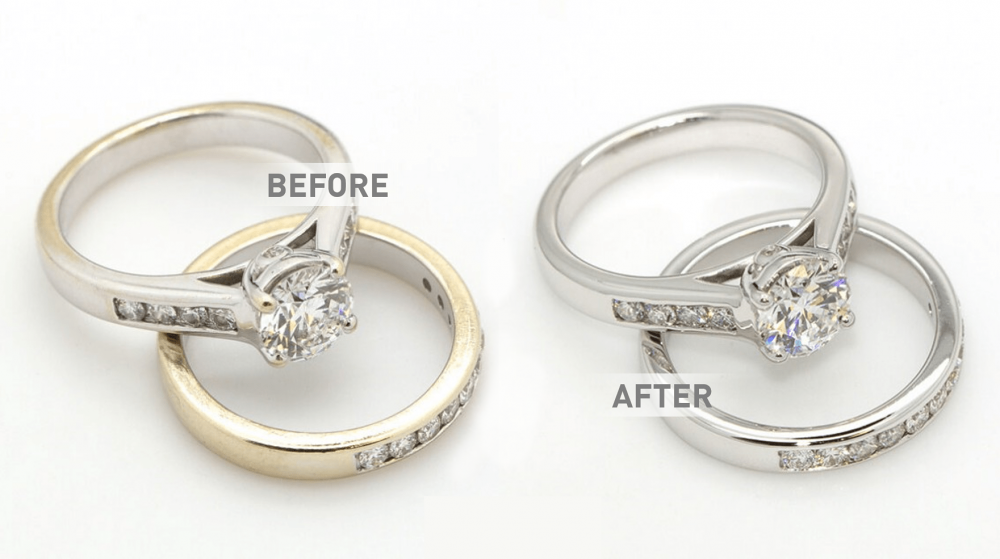
Adding “white metals” to fine gold is not enough to create beautiful white gold jewellery. White gold gets its pure white colour from the rhodium coating applied to the jewellery. This is called rhodium plating or rhodium plating of white gold. The rhodium coating protects against corrosion and protects your white gold jewellery against heat, wear and tear and even some acids.
Rhodium plating gives 18 carat white gold jewellery its beautiful silver colour and prevents the white gold from yellowing. On the other hand, it requires a bit more care and becomes a bit more sensitive to scratches.
Therefore, white gold jewellery requires a certain amount of care. Over time (every 2 to 10 years, depending on how intensively you use the piece), the rhodium plating of your white gold jewellery needs to be repeated, as the precious metal does not have a colour that lasts forever. This is different from platinum.
Because of this extra step, white gold is more expensive with some jewellers than, say, plain yellow gold. However, 18-carat white gold is in principle no more valuable than 18-carat yellow gold; the proportion of gold is identical. The price of a gram of yellow, red or white gold can vary depending on the jewellery in which it is used, the cost of the artwork, etc. This is different from yellow investment gold which follows the price of the gold market.
Want to see the full range of Tavex investment gold? Click here!
How is white gold different from platinum?
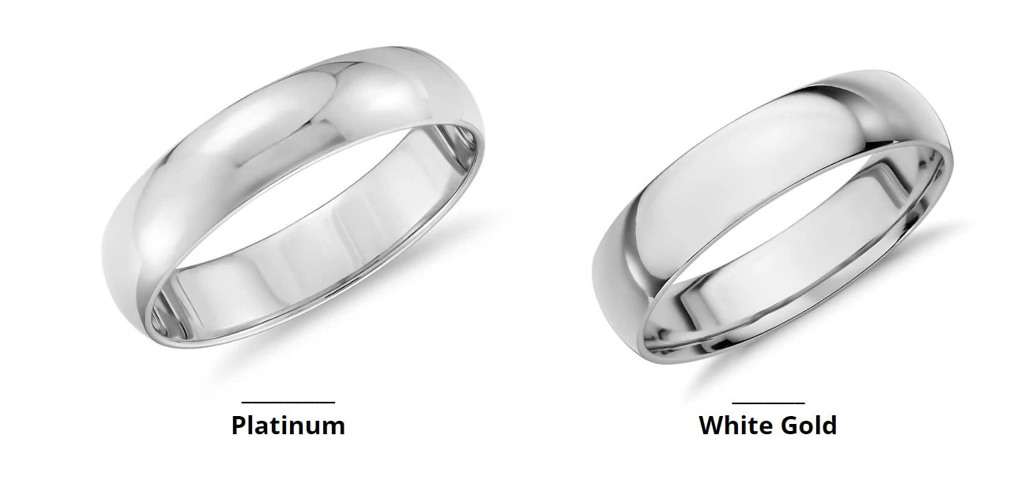
The difference between white gold and platinum is not always clear. Now that you have answered the question “What is platinum?” we want to go into more detail to clarify the difference between the two precious metals. One noticeable difference is the already mentioned colour fastness. A platinum ring does not lose its white-grey colour over time. The colour itself is also different.
Platinum is a very durable and hypoallergenic raw material, but heavier and more expensive than white gold.
Depending on the alloy used, the colour of white gold jewellery tends towards silver. The choice between white gold and silver is not easy. However, we would rather choose white gold. Platinum, on the other hand, tends to look grey.
What is the history of white gold?
The use of white gold in jewellery is a fairly recent trend. Before World War II, platinum was the main ingredient in white or silver jewellery. However, the US government confiscated all platinum during World War II to manufacture war materials: batteries, weapons, aircraft engine parts …. To compensate for the acute platinum shortage, jewellers looked for an alternative. And that was white gold.
What role did white gold play after the war? The precious metal remained popular for its charm, affordability and ease of wear. Moreover, in Western culture, it is often popular to wear diamond rings made of white gold.
What does white gold look like?
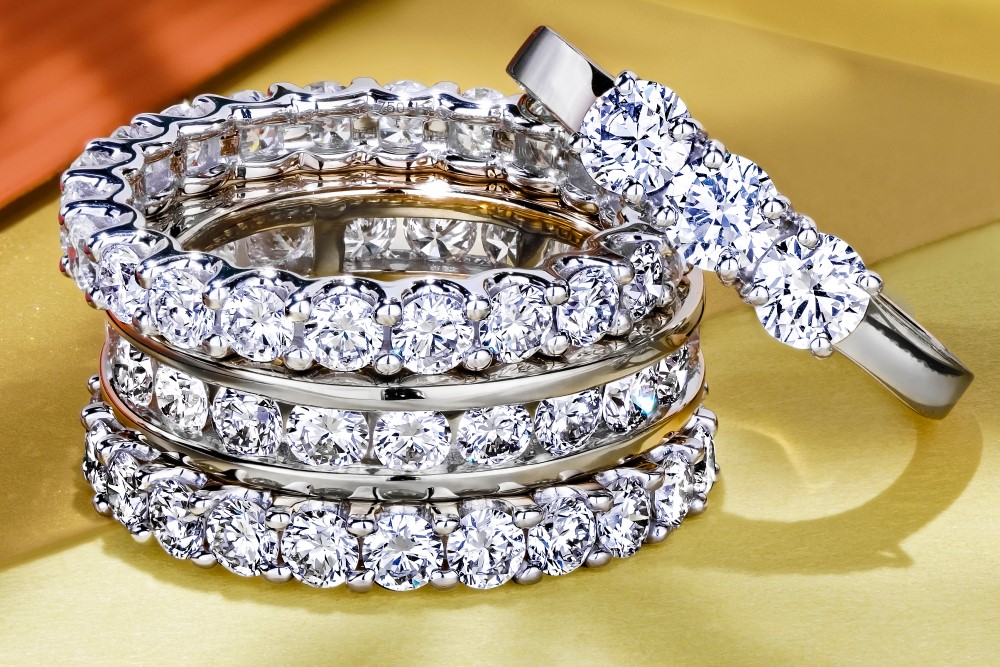
White gold does not occur naturally. It is an alloy of pure, yellowish gold with palladium, nickel, zinc and silver. This gives it a light, slightly greyish colour. Unplated white gold is therefore sometimes also called grey gold. The silvery, brilliant lustre for which white gold is known and popular is given by a thin coating of rhodium.
In the first stage of white gold production, the gold and the metals used to alloy it are melted in a furnace to form a homogeneous mixture. The newly created white gold is then forged in several steps into the finished piece of jewellery. Finally, it is coated with a thin layer of rhodium in a gavanic bath.
Advantages and Disadvantages of White Gold
White gold has become increasingly popular in the jewellery world due to its unique properties and stunning appearance. But like all precious metals, it has its own advantages and disadvantages. Let’s take a closer look:
Advantages:
- Luxurious look: White gold has an elegant and sophisticated silvery-white colour, making it a perfect choice for those who prefer a modern and stylish look in their jewellery.
- Versatility: White gold complements a wide range of gemstones, providing endless possibilities for design. Whether it is a diamond, sapphire, emerald or any other coloured gemstone, white gold enhances the brilliance of the stones and creates a beautiful contrast.
- Durability: The addition of alloying metals such as palladium, nickel and silver to gold increases its strength and durability. This ensures that white gold jewellery, especially rings, can withstand the rigours of everyday life.
- Affordability: Compared to platinum, white gold is a more budget-friendly option for those seeking the platinum-like look without the higher price tag.
Disantvantages:
- Rodium coating maintenance: The rhodium coating that gives white gold its shiny white lustre is not permanent and will wear away over time. In order to maintain its neat appearance, a new coating is required from time to time. However, this process is simple and can be done by a professional jeweller.
- Allergic Reactions: Some people may be sensitive to the nickel content of white gold, which can lead to skin irritations. However, many jewellers now offer nickel-free alternatives of white gold, making it a safer choice for those with allergies.
- Colour fading: Without rhodium plating, white gold can develop a slight yellowish tone over time due to its natural gold base. Regular maintenance and recoating is essential to preserve the bright white colour.
- Lower Gold Content: Although white gold contains a significant amount of pure gold, its gold content is diluted compared to yellow gold due to the alloying metals. This can be a consideration for those who prioritise a higher gold percentage in their jewellery.
It is important to weigh these advantages and disadvantages based on personal preferences and priorities when choosing white gold for your next jewellery purchase. Whether you appreciate its versatility, durability or luxurious appearance, white gold continues to fascinate jewellery enthusiasts around the world.
What is the difference between white gold, platinum and silver?
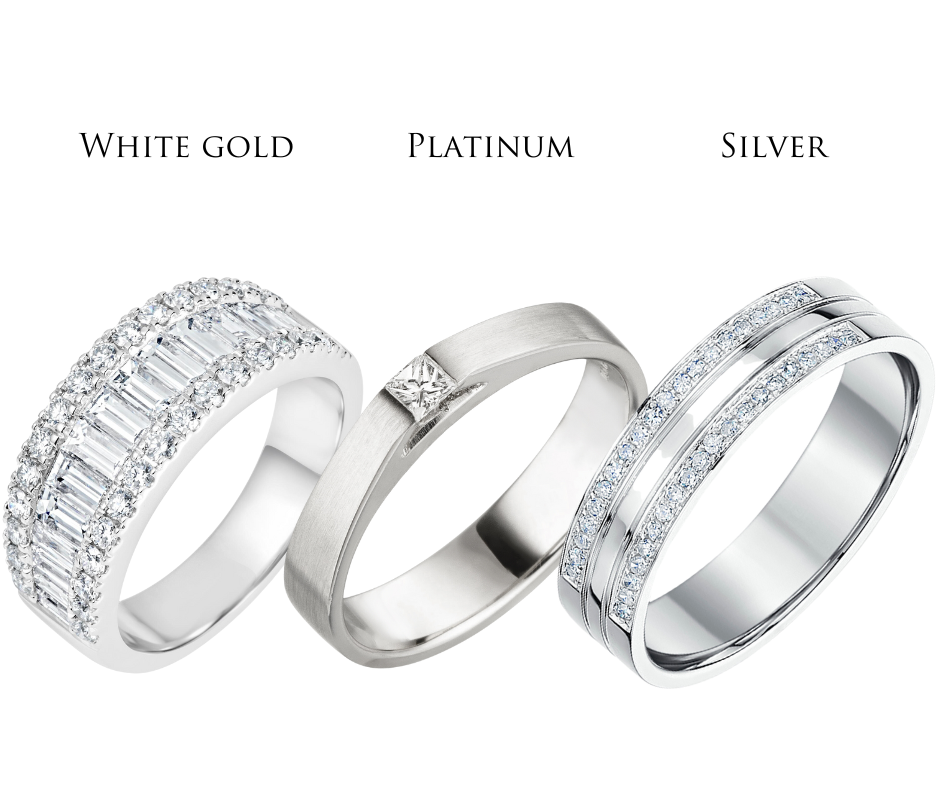
White gold, platinum and silver are all precious metals used in jewellery making and have their own unique properties. Let’s explore the differences between them:
1. White gold:
- The element in white gold is gold (Au), which gives it its characteristic yellowish base.
- To give white gold its silvery-white appearance, it is alloyed with white metals such as palladium, nickel, zinc and silver.
- White gold is durable and perfect for jewellery such as rings and bracelets, as it is strong enough to withstand daily wear and tear.
- White gold jewellery is rhodium-plated to give it a bright, shiny finish and prevent yellowing. However, this requires regular maintenance as the coating wears off over time.
- White gold is a popular choice for those who want a modern and stylish look at a slightly lower price than platinum.
2. Platinum:
- Platinum is a completely separate element and is naturally white in its purest form. It requires no alloying to achieve its white colour.
- It is extremely durable, resistant to corrosion and remains unaffected over time, making it ideal for jewellery such as engagement and wedding rings that are expected to be worn for long periods of time.
- Platinum is also a hypoallergenic material, suitable for those with sensitive skin that may react to nickel or other alloying metals in white gold.
- This precious metal is considered more exclusive and has a higher price tag than both white gold and silver.
3. Silver:
- Silver is the most affordable of the three precious metals and has a natural white colour.
- It is softer than both white gold and platinum, making it less suitable for jewellery that is subject to wear and tear, such as rings.
- Silver has a charming lustre and is often used to create beautiful necklaces, earrings and bracelets.
- Because silver is more susceptible to oxidation and discolouration, it requires more maintenance than both white gold and platinum.
In summary, white gold, platinum and silver are all excellent choices for jewellery, but they have different characteristics and price ranges. If you are looking for a durable and hypoallergenic material with a natural white colour and are willing to invest a little more, platinum may be the perfect choice. However, if you want a modern look at a slightly lower price, white gold can be a great option. Silver suits those looking for a more affordable option, but remember that it requires a little more care and maintenance to keep its beauty over time. The choice depends on your personal preferences, style and budget.
Want to see the full range of Tavex investment gold? Click here!
Gold price (XAU-SEK)
41226,40 SEK/oz
- 317,00 SEK
Silver price (XAG-SEK)
603,50 SEK/oz
- 8,64 SEK
Recommended articles


You might also like to read


Contact
Tavex AB Reg.nr.: 556671-1189 Smålandsgatan 9, 111 46 Stockholm, Sweden
E-mail: tavex@tavex.se
Tel. 08-678 20 30