Tavex uses cookies to improve your user experience. By continuing to use our site without changing your settings, you agree to receive cookies from Tavex’s website. Read more about our cookie policy
Please select what cookies you allow us to use
Cookies are small files of letters and digits downloaded and saved on your computer or another device (for instance, a mobile phone, a tablet) and saved in your browser while you visit a website. They can be used to track the pages you visit on the website, save the information you enter or remember your preferences such as language settings as long as you’re browsing the website.
Cookie usage
Necessary
| Cookie name | Cookie description | Cookie duration |
|---|---|---|
| tavex_cookie_consent | Stores cookie consent options selected | 60 weeks |
| tavex_customer | Tavex customer ID | 30 days |
| wp-wpml_current_language | Stores selected language | 1 day |
| AWSALB | AWS ALB sticky session cookie | 6 days |
| AWSALBCORS | AWS ALB sticky session cookie | 6 days |
| NO_CACHE | Used to disable page caching | 1 day |
| PHPSESSID | Identifier for PHP session | Session |
| latest_news | Helps to keep notifications relevant by storing the latest news shown | 29 days |
| latest_news_flash | Helps to keep notifications relevant by storing the latest news shown | 29 days |
| tavex_recently_viewed_products | List of recently viewed products | 1 day |
| tavex_compare_amount | Number of items in product comparison view | 1 day |
Preference
| Cookie name | Cookie description | Cookie duration |
|---|---|---|
| chart-widget-tab-*-*-* | Remembers last chart options (i.e currency, time period, etc) | 29 days |
| archive_layout | Stores selected product layout on category pages | 1 day |
Marketing
| Cookie name | Cookie description | Cookie duration |
|---|---|---|
| cartstack.com-* | Used for tracking abandoned shopping carts | 1 year |
| _omappvp | Used by OptinMonster for determining new vs. returning visitors. Expires in 11 years | 11 years |
| _omappvs | Used by OptinMonster for determining when a new visitor becomes a returning visitor | Session |
| om* | Used by OptinMonster to track interactions with campaigns | Persistent |
Statistic
| Cookie name | Cookie description | Cookie duration |
|---|---|---|
| _ga | Used to distinguish users | 2 years |
| _gid | Used to distinguish users | 24 hours |
| _ga_* | Used to persist session state | 2 years |
| _gac_* | Contains campaign related information | 90 days |
| _gat_gtag_* | Used to throttle request rate | 1 minute |
| _fbc | Facebook advertisement cookie | 2 years |
| _fbp | Facebook cookie for distinguishing unique users | 2 years |

When does gold melt – and how do you melt it at home?
Published by Mattias Söderström in category Articles on 21.03.2024
Gold price (XAU-SEK)
41226,40 SEK/oz
- 317,00 SEK
Silver price (XAG-SEK)
603,50 SEK/oz
- 8,64 SEK

Innehållsförteckning / Table of Contents
It’s becoming increasingly common for people to melt gold – but why do they do it, and what exactly is the melting point of gold? We’ve got the answers!
Zinc, sodium, tin, and other metals melt at around 600 degrees. However, gold requires a completely different level to melt. That’s why, in this article, we’ve explored the melting point of gold and whether it’s possible to melt gold at home.
What determines when gold melts and when does gold melt?
Gold, which historically continues to rise in value, has a melting point that’s not only crucial for jewelers but also for those interested in melting gold at home.
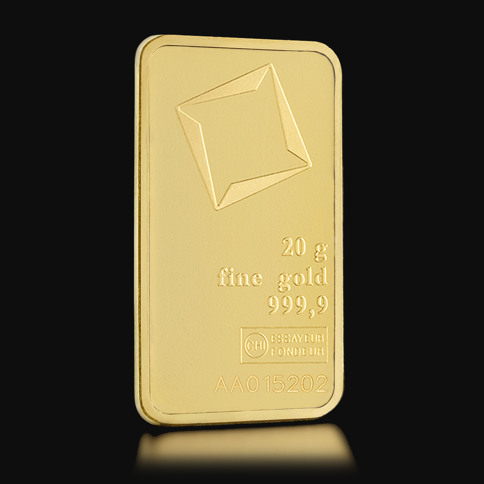
The temperature at which gold melts is around 1064 degrees or higher. Reaching this temperature is vital if you want to turn gold into a new object, such as melting a gold bar to make new rings or recycle gold from older jewelry.
Buy this gold bar at a great price!
The importance of the melting point in different contexts
Jewelry making and gold recycling
Knowing when gold melts is extremely important for those involved in jewelry making or wanting to recycle gold. The melting point allows gold to be melted down and transformed into new, unique pieces of jewelry. This process not only recycles this valuable precious metal but can also breathe new life into an old piece of jewelry collecting dust in a drawer.
Melting gold at home: Is it possible?
If you know how and have the right equipment, you can actually melt gold at home. But, you need an oven that can reach really high temperatures, up to 1064°C, to melt gold. It’s extremely important to be cautious if you’re going to do this, as a very hot oven and molten gold can be very dangerous.
What is an alloy and how does It affect the melting point of gold?
An alloy occurs when gold is mixed with other metals, such as silver, copper, or palladium. When gold is combined with these other metals, its melting point is also affected. This means that the exact temperature at which gold transitions from solid to liquid form can vary depending on the types and amounts of other metals in the mixture.
This is important to know if you’re thinking about melting down gold because it’s not just the purity of the gold that determines at which heat it starts to melt. Each alloy – or ‘metal mix’, if you will – has its unique melting point, which needs to be considered for the process to be successful.
So, when you’re turning old gold into something new, it’s crucial to be aware of your gold alloy’s specific melting behavior.
The cost of melting gold
The cost of melting gold mainly depends on the current price of gold for purchasing the gold you intend to melt. The more expensive your gold purchase, the more expensive the entire process becomes. Fixed costs, such as the oven for melting, aren’t nearly as expensive and likely only need to be purchased once.
Melting gold yourself – summary
Learning when gold melts and how to create new items from melted gold is both exciting and can be rewarding. It doesn’t matter if you do it just for fun, as a hobby, or on a more serious level. Melting gold means you need to know at which temperature it melts, how to handle it when it’s hot, and consider the costs and value of gold.
With the right tools, you can transform gold into almost anything you can imagine, from jewelry to other gold products.
Feel free to comment if you have tried or want to try melting gold yourself!
Gold price (XAU-SEK)
41226,40 SEK/oz
- 317,00 SEK
Silver price (XAG-SEK)
603,50 SEK/oz
- 8,64 SEK
Recommended articles


You might also like to read


Contact
Tavex AB Reg.nr.: 556671-1189 Smålandsgatan 9, 111 46 Stockholm, Sweden
E-mail: tavex@tavex.se
Tel. 08-678 20 30

Comments